A Defining Decision on Indigenous Self-Government, the Charter, and Section 25
The Supreme Court of Canada’s decision in Dickson v. Vuntut Gwitchin First Nation, 2024 SCC 10, will almost certainly become one of the leading constitutional law decisions on Indigenous self-government in the post-Delgamuukw and post-Tsilhqot’in eras. The case sits at the intersection of three fundamental constitutional principles: Indigenous self-determination, individual Charter rights, and reconciliation.
For decades, courts and scholars have debated whether self-governing Indigenous nations are subject to the Canadian Charter of Rights and Freedoms, and, if so, how conflicts between individual Charter protections and collective Indigenous rights should be resolved. While section 25 of the Charter was specifically included in the Constitution to protect Indigenous rights from erosion through Charter litigation, the Supreme Court had never provided a comprehensive analytical framework for its application. Dickson changes that.
In a complex and divided judgment, the Court held that the Charter applies to the Vuntut Gwitchin First Nation (“VGFN”), a self-governing Yukon First Nation operating under a modern treaty and self-government regime. However, the Court also held that a residency requirement for elected leaders, despite prima facie violating section 15 equality rights, is protected by section 25 of the Charter because it reflects and preserves a collective Indigenous right connected to governance, land, culture, and community identity.1
The decision therefore stands for two propositions that may initially appear contradictory but are ultimately complementary: Indigenous governments may be subject to Charter scrutiny, yet Indigenous collective rights may simultaneously be protected from Charter-based invalidation.
For Indigenous governments, treaty organizations, and self-governing First Nations across Canada, Dickson is a landmark ruling that reshapes the constitutional landscape.
The Dispute: Residency, Representation, and Self-Government
At the centre of the case was a provision in the Constitution of the Vuntut Gwitchin First Nation requiring elected Chiefs and Councillors to reside on VGFN settlement lands. Candidates elected while living elsewhere were required to relocate to settlement lands within fourteen days of the election.2
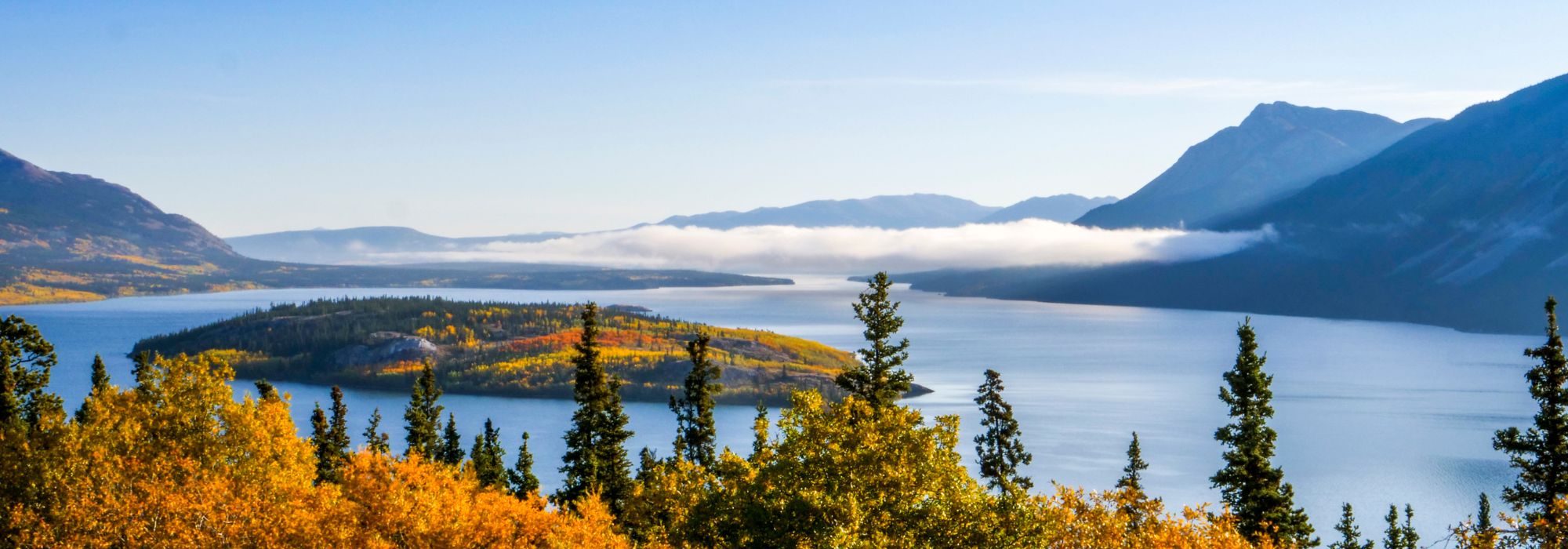
The Vuntut Gwitchin are a self-governing First Nation located in northern Yukon. Their seat of government is Old Crow, a remote fly-in community situated approximately 800 kilometres north of Whitehorse.3 Historically, VGFN leadership resided on traditional territory, and the connection between governance and land remained an important aspect of the Nation’s constitutional structure.4
Cindy Dickson, a VGFN citizen residing in Whitehorse, wished to run for Council but could not relocate to Old Crow due to her son’s medical needs, employment obligations, and family circumstances.5 She argued that the residency requirement effectively barred her from seeking elected office and infringed her equality rights under section 15(1) of the Charter.6
The challenge eventually reached the Supreme Court of Canada after both the Yukon Supreme Court and Yukon Court of Appeal concluded that, while the Charter applied, section 25 ultimately shielded the residency requirement from constitutional invalidation.7
A Constitutional Crossroads
The appeal raised issues far broader than a residency requirement.
The Court was required to answer three constitutional questions of national significance:
- Does the Charter apply to self-governing Indigenous governments operating under modern treaty frameworks?
- If the Charter applies, does the residency requirement violate section 15 equality rights?
- If equality rights are infringed, does section 25 protect the Indigenous collective interest from Charter-based invalidation?8
These questions required the Court to confront a long-standing tension within Canadian constitutional law: how to reconcile liberal individual rights with collective Indigenous self-government rights.
The Charter Applies to the Vuntut Gwitchin First Nation
Perhaps the most consequential aspect of the majority judgment is its conclusion that VGFN constitutes a “government” for the purposes of section 32 of the Charter.9
Relying heavily on Eldridge v British Columbia (Attorney General) and Godbout v Longueuil (City), the majority reaffirmed that Charter application is not limited to Parliament, provincial legislatures, and traditional governmental actors. Rather, section 32 can capture entities that are governmental in character or that perform governmental functions.10
According to the majority, VGFN possessed several hallmarks of government:
- democratically elected leadership;
- public accountability mechanisms;
- taxation authority;
- legislative powers;
- law enforcement and administrative authority;
- governance over a defined territory; and
- powers recognized and implemented through federal legislation.11
Taken together, these attributes established that VGFN was a “government by nature.”12 As Justice Kasirer and Justice Jamal observed:
“The Charter applies to the VGFN and to its citizens like Ms. Dickson, principally, but not only, because the VGFN is a government by nature.”13
Importantly, however, the Court expressly declined to determine whether Indigenous governments exercising an inherent right of self-government, independent of federal legislation or modern treaty frameworks, would also be subject to the Charter.14 This caveat is likely to fuel future litigation, particularly as more Indigenous nations pursue recognition of inherent jurisdiction outside delegated statutory frameworks.
Equality Rights and the Recognition of a New Analogous Ground
Once the Court determined that the Charter applied, the residency requirement was analyzed under section 15.
The majority concluded that the residency requirement created a distinction based upon what it recognized as a new analogous ground: “non-resident status in a self-governing Indigenous community.”15
This represents one of the most significant developments in Canadian equality jurisprudence since Corbiere v Canada (Minister of Indian and Northern Affairs). In Corbiere, the Supreme Court recognized “Aboriginality-residence” as an analogous ground in the context of voting rights under the Indian Act.16
The majority concluded that the realities facing Indigenous citizens who reside away from traditional territory often reflect structural disadvantages. Educational opportunities, health care access, employment prospects, housing pressures, and family obligations frequently require Indigenous people to live away from their home communities while maintaining deep cultural, familial, and political connections to them.17
The residency requirement significantly deterred Ms. Dickson from seeking office. As the majority explained:
“Ms. Dickson is being denied, or at least significantly deterred from, the exercise of a fundamental democratic right — the right to run for Council — because of her non-resident status.”18
The Court therefore concluded that a prima facie breach of section 15 had been established.19
The Real Significance of the Case: Section 25 of the Charter
The most important contribution of Dickson is undoubtedly its treatment of section 25.
For more than four decades, section 25 remained one of the least developed provisions in the Charter. While courts occasionally referenced it, its substantive operation remained uncertain.20 The majority sought to resolve that uncertainty. According to the Court, the purpose of section 25 is:
“to protect certain Indigenous collective rights from the application of conflicting individual Charter rights or freedoms, when such application would diminish the Indigenous difference protected and recognized by the collective rights.”21
The Court emphasized that “Indigenous difference” encompasses interests arising from:
- prior Indigenous sovereignty;
- prior occupation of the land;
- distinctive Indigenous cultures;
- Indigenous governance structures; and
- treaty relationships.22
In doing so, the Court recognized section 25 as a constitutional mechanism designed to preserve Indigenous distinctiveness rather than assimilate Indigenous institutions into mainstream constitutional norms.
The Supreme Court’s New Four-Part Section 25 Framework
The majority established a four-step framework for future section 25 analyses.23
- First, a claimant must establish a prima facie Charter breach.
- Second, the party invoking section 25 must establish that the impugned conduct represents an Aboriginal, treaty, or “other” right protected by section 25.
- Third, the party invoking section 25 must demonstrate an irreconcilable conflict between the individual Charter right and the collective Indigenous right.
- Fourth, courts must consider any constitutional limits that may apply, including section 28 of the Charter and section 35(4) of the Constitution Act, 1982.24
The Court rejected both an absolute shield model and a purely interpretive model. Instead, section 25 operates where there is a genuine constitutional conflict that cannot be reconciled.25
As the majority stated:
“The conflict between the rights must be real and irreconcilable, such that there is no way to give effect to the individual Charter right without abrogating or derogating from the right within the scope of s. 25.”26
This framework will likely become the leading authority governing future disputes involving Indigenous governance and Charter rights.
Why the Residency Requirement Was Protected
Having developed its framework, the Court then considered whether the VGFN residency requirement qualified for section 25 protection. The majority concluded that it did.
The Court held that the residency requirement represented an exercise of an “other right” protected by section 25: namely, VGFN’s collective right to define the composition of its governing institutions in a manner that preserves its distinctive relationship with settlement lands and traditional governance practices.27
The Court emphasized the historical and cultural importance of maintaining a direct connection between leaders and VGFN territory:
“Requiring VGFN leaders to reside on settlement land helps preserve the leaders’ connection to the land, which is deeply rooted in the VGFN’s distinctive culture and governance practices.”28
The majority found that permitting non-resident leaders to serve while remaining permanently outside the community would fundamentally alter VGFN’s chosen governance model. Consequently, the equality claim and the collective governance right were deemed irreconcilably incompatible.29
Because section 25 applied, the section 15 claim could not be given effect.30
The Dissents: Fundamental Disagreements About Indigenous Constitutionalism
The dissents reveal deep judicial disagreement regarding the future constitutional relationship between Indigenous governments and the Charter.
Justices Martin and O’Bonsawin agreed that the Charter applied and that section 15 had been violated. However, they rejected the majority’s broad conception of “other rights” under section 25.31 In their view, not every exercise of Indigenous governmental authority constitutes a protected Indigenous collective right.
They would have held that the residency requirement was unconstitutional and incapable of justification under section 1 because it completely excluded non-resident citizens from serving on Council.32
Justice Rowe, by contrast, would have gone even further. He concluded that the Charter did not apply at all.33
His reasons emphasized Indigenous autonomy and self-determination, arguing that Indigenous governments were not parties to the constitutional bargain that produced the Charter and that their governance structures derive legitimacy from their own laws, customs, and traditions rather than from Canadian governmental institutions.34
Although Rowe J. was in dissent, his reasons will likely remain influential in future debates concerning inherent Indigenous self-government.
What This Decision Means for Indigenous Governments
The practical implications of Dickson are substantial.
First, self-governing First Nations established through modern treaties and legislative self-government agreements should expect courts to scrutinize governance decisions through a Charter lens.35
Second, Indigenous governments now have much clearer guidance regarding how section 25 can protect community-specific governance structures. The Court recognized that collective rights connected to Indigenous difference may prevail over individual Charter claims where genuine constitutional conflict exists.36
Third, Indigenous nations drafting constitutions, governance laws, election codes, and citizenship frameworks must carefully consider how governance choices can be justified as expressions of Indigenous difference, collective identity, and self-determination.37
Finally, the decision leaves unresolved the most important question of all: whether Indigenous governments exercising inherent authority independent of Canadian legislative frameworks are subject to the Charter. The Supreme Court expressly declined to answer that question, ensuring that future litigation in this area is inevitable.38
Conclusion
Dickson v. Vuntut Gwitchin First Nation is likely to become a foundational authority in Indigenous constitutional law. The decision confirms that the Charter may apply to self-governing Indigenous nations, recognizes a new equality-rights ground for Indigenous citizens living away from their communities, and establishes the first comprehensive framework for section 25 of the Charter.
Most importantly, the case acknowledges an essential constitutional reality: reconciliation requires respecting both individual rights and Indigenous collective autonomy. The Supreme Court’s answer was not to prioritize one over the other, but rather to develop a constitutional mechanism through which both can coexist.
For Indigenous governments, treaty organizations, and communities engaged in the exercise of self-government, Dickson provides critical guidance on how governance authority, Indigenous difference, and constitutional rights will interact going forward.
How Barriston Law Can Help
The Supreme Court’s decision in Dickson v. Vuntut Gwitchin First Nation highlights the increasingly complex legal landscape surrounding Indigenous self-government, governance constitutions, Charter compliance, elections, citizenship, and the evolving relationship between collective Indigenous rights and individual constitutional protections.
As Indigenous governments continue to exercise greater jurisdiction through modern treaties, self-government agreements, inherent governance authority, and community constitutions, legal questions concerning governance structures and constitutional rights will become increasingly significant. Whether a community is drafting election laws, developing constitutional documents, reviewing governance policies, responding to Charter-based challenges, or exercising rights protected under section 35 of the Constitution Act, 1982, it is essential that these initiatives be grounded in a thorough understanding of both Indigenous legal traditions and Canadian constitutional law.
At Barriston Law, our Indigenous Law Department advises First Nations, Tribal Councils, Métis organizations, Indigenous economic development corporations, and community leadership on a broad range of governance and constitutional matters, including:
- Drafting and reviewing First Nation constitutions, governance codes, election laws, and citizenship laws;
- Advising on self-government agreements, treaty implementation, and modern treaty governance frameworks;
- Representing Indigenous governments in litigation involving Charter rights, Aboriginal rights, treaty rights, and administrative law issues;
- Providing strategic advice regarding Indigenous jurisdiction, law-making authority, and governance reform initiatives;
- Assisting communities with the development of culturally grounded governance structures that reflect community values while addressing evolving legal requirements; and
- Supporting Indigenous governments in negotiations and relationships with federal, provincial, and territorial governments.
Our team understands that governance is not simply a legal issue, it is closely connected to community identity, self-determination, nation rebuilding, and reconciliation. We work collaboratively with Indigenous communities to develop practical legal solutions that respect Indigenous laws, traditions, and governance objectives while navigating Canada’s constitutional framework.
Contact Barriston Law
To learn more about how Barriston Law can assist your community with governance, self-government, treaty implementation, constitutional law, Indigenous rights litigation, or strategic legal planning, visit www.barristonlaw.com or contact our Indigenous Legal Department directly.
Written by Garnik Martirosov
Disclaimer: This article is provided for general informational purposes only and does not constitute legal advice. Indigenous governance, self-government, constitutional rights, treaty implementation, and election laws involve complex legal considerations that vary significantly between communities and governance regimes. Every Nation’s circumstances are unique. Readers should obtain independent legal advice tailored to their specific situation before making decisions relating to governance structures, constitutional reforms, election laws, or Indigenous rights matters.
(1) Dickson v Vuntut Gwitchin First Nation, 2024 SCC 10 [Dickson] at paras 1–3, 164–165.
(2) Ibid at para 1.
(3) Ibid at para 12.
(4) Ibid at paras 4–5.
(5) Ibid at paras 17–19.
(6) Ibid at para 20.
(7) Dickson v Vuntut Gwitchin First Nation, 2020 YKSC 22; Dickson v Vuntut Gwitchin First Nation, 2021 YKCA 5.
(8) Dickson, supra note 1 at para 73.
(9) Ibid at paras 96–102.
(10) Eldridge v British Columbia (Attorney General), [1997] 3 SCR 624; Godbout v Longueuil (City), [1997] 3 SCR 844.
(11) Dickson, supra note 1 at paras 96–102.
(12) Ibid.
(13) Ibid at para 2.
(14) Ibid at paras 101–102.
(15) Ibid at paras 148–151.
(16) Corbiere v Canada (Minister of Indian and Northern Affairs), [1999] 2 SCR 203.
(17) Dickson, supra note 1 at paras 152–154.
(18) Ibid at para 153.
(19) Ibid at para 154.
(20) See generally R v Kapp, 2008 SCC 41; Corbiere, supra note 16.
(21) Dickson, supra note 1 at para 127.
(22) Ibid at paras 123–125.
(23) Ibid at paras 143–144.
(24) Ibid.
(25) Ibid at paras 132–138.
(26) Ibid at para 136.
(27) Ibid at paras 154–161.
(28) Ibid at para 160.
(29) Ibid at paras 161–164.
(30) Ibid at para 165.
(31) Ibid at paras 214–247 (Martin and O’Bonsawin JJ, dissenting).
(32) Ibid at paras 250–255.
(33) Ibid at paras 257–314 (Rowe J, dissenting).
(34) Ibid at paras 269–304.
(35) Ibid at paras 96–103.
(36) Ibid at paras 127–144.
(37) Ibid at paras 154–165.
(38) Ibid at paras 101–102.